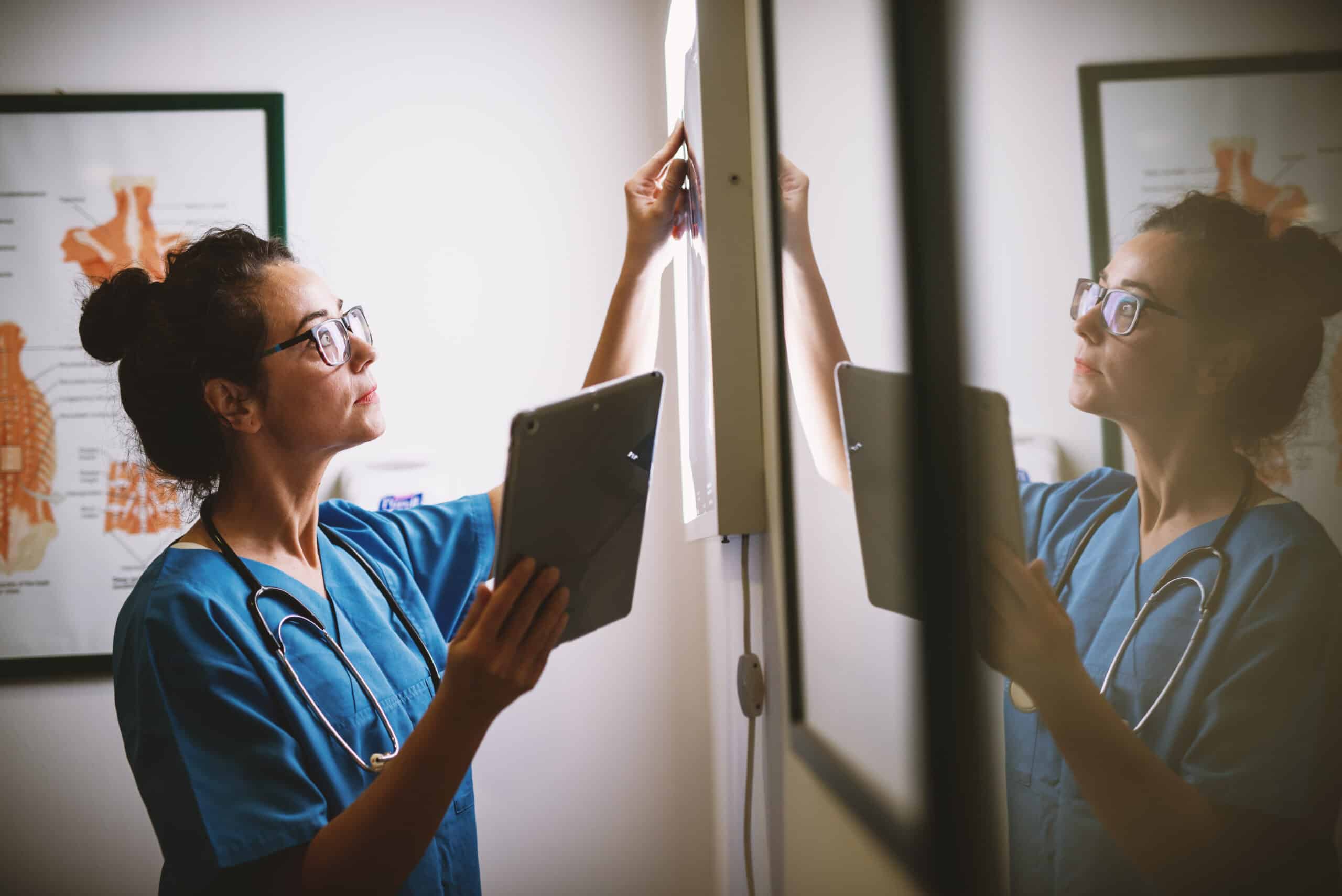
“Not only does mobile access help us improve patient care by facilitating secure real-time collaboration and coordination between teams, but it also empowers patients to access their health information—anytime, anywhere,” Michael Trzcinski, vice president of IT at a medical research solutions company, tells HealthcareITNews.
From statements like these, it’s clear that mobile solutions are becoming a necessity for everyone in the healthcare space, from clinical researchers and providers aiming to make a difference in the lives of patients to users seeking convenient, accessible healthcare experiences.
Join us as we explore the definition, top benefits, security considerations, and future implications of mobile healthcare and why these solutions are a must-have for providers and patients.
Key Takeaways
- Learn why mobile healthcare solutions are having such an impact on the healthcare industry
- Explore the top benefits of mobile solutions for both providers and patients
- Understand why HIPAA compliance and security matter in your practice’s mobile technology
- Discover what you need to know about the future of mobile solutions
What are Mobile Healthcare Solutions?
Simply put, mobile healthcare solutions leverage mobile technology to deliver healthcare services and information. Think of it as having the power of healthcare directly at your fingertips.
This includes a wide range of tools, such as mobile health apps (mHealth) for monitoring vital signs, cloud-based electronic health records (EHRs) that allow secure mobile EHR access and telehealth services, and patient-facing portals available on smartphones. And these solutions are growing and evolving at a tremendous rate.
For example, according to Grand View Research, the global mHealth app market is expected to reach $86.37 billion by 2030. What’s behind the massive growth? Unsurprisingly, the widespread availability and use of smartphones have made these apps more accessible to a larger population.
For you, the flexibility of apps and other mobile solutions can help improve patient healthcare outcomes and patient-provider communication. Here’s a few to consider:
- Smartphone apps for scheduling appointments and reminders
- Telehealth for patient monitoring and consultations
- Virtual visits for chronic disease management.
These solutions and others are becoming the standard in modern healthcare settings, transforming how providers work and how patients engage with their health.
FROM ONE OF OUR PARTNERS: Mobile Healthcare Trends
Key Benefits for Healthcare Providers
Boosting efficiency. Improving patient care. These are just some of the ways mobile solutions can revolutionize how you operate. Here are additional key benefits you need to know:
Enhanced Workflow and Productivity
Imagine being able to chart patient information on the go, right at the point of care. Mobile healthcare solutions make this a reality.
With mobile documentation tools and real-time mobile EHR access, you can instantly update patient records, review test results, and access critical information, all from a tablet or smartphone. This means less time spent hunched over a desk and more time focused on your patients.
For example, DrChrono by EverHealth offers an integrated EHR platform that is built to meet the unique needs of modern healthcare organizations, including a secure mobile EHR platform.
The cloud-based iPad EHR app provides an end-to-end solution that seamlessly integrates patient engagement, scheduling, clinical workflow, and medical billing. For example, you can easily use charts on your iPad or desktop, allowing you to:
- Utilize features like free-draw, allowing you to take a photo from the EHR and annotate it directly.
- Use medical-speech-to-text for an adaptive, accurately dictated note-taking experience.
- Customize medical templates, letting you tailor charting workflow to the needs of your practice.
Improved Care Delivery and Decision Making
Having access to real-time health data at your fingertips empowers faster and more informed care delivery and communication with your patients. For example, Updox by EverHealth offers a healthcare Communications Suite (that integrates with EHRs), which includes a HIPAA-compliant Secure Text feature.
This tool lets you easily communicate with patients and other providers without compromising their privacy or protected health information (PHI).
For example, you can securely attach forms, photos, or videos, and easily file conversations to the EHR. Having all this information in one location allows you to:
- Communicate ongoing health plans
- Conduct faster clinical decision making with real-time data
- Check in on a patient’s status, fostering the patient/provider relationship
Reduced Administrative Burden
As a provider, your days should not be filled with tedious paperwork and endless administrative tasks. Mobile healthcare solutions automate data entry, offer mobile appointment scheduling, and integrate tools for documentation and billing.
For example, Updox offers a Charge Capture solution that makes recording performed patient services and submitting to payers for reimbursement easy. The tool offers features like mobile rounding, simple charge entry, actionable reporting, and integrated secure messaging to optimize your revenue cycle. This solution automates the billing process and can be easily customized to fit your workflow.

Key Benefits for Patients
Americans are spending an average of eight hours a month handling their healthcare and are waiting 26 days to see a new doctor in many big cities, according to MedCityNews.
It’s no wonder patients want more convenience when it comes to their care. In fact, according to TechTarget, 92% of patients say that convenience is essential when choosing their primary provider.
Mobile health options, such as virtual visits, allow patients to save time, reduce transportation expenses, and avoid leaving their homes. This convenience opens the door for patients to access quality care at a lower cost and improve outcomes. Below are the top patient benefits to consider.
Convenient and Remote Access to Care
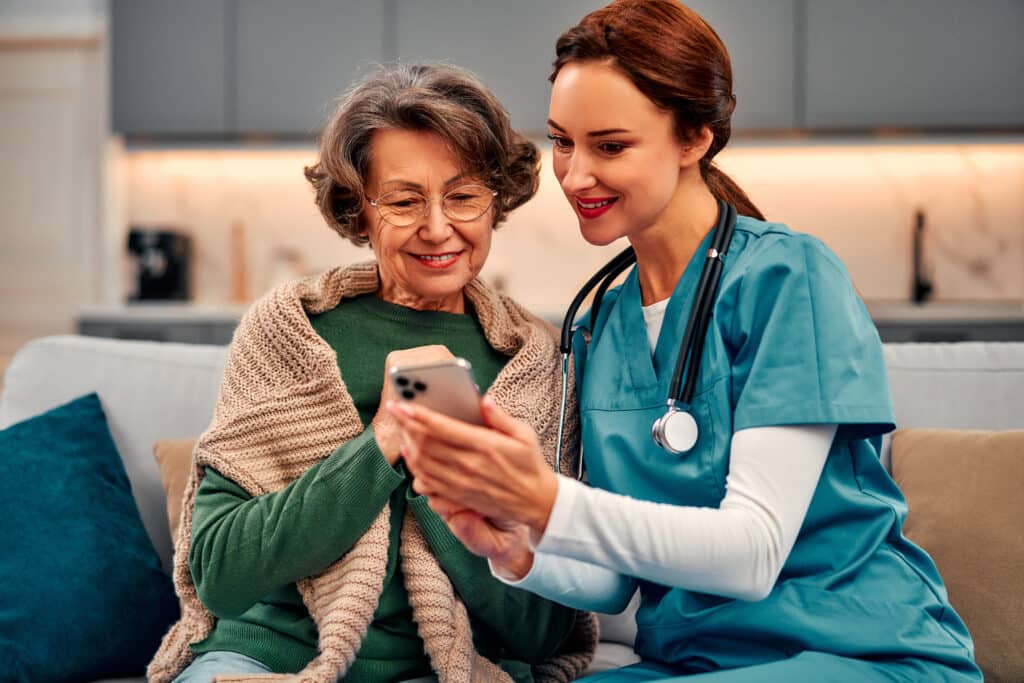
Virtual healthcare access is now a reality thanks to mobile solutions. Through tools like telehealth integration, patients can consult with their doctors, receive diagnoses, and manage their health from the comfort of their own homes or while on the go.
For example, Updox offers a secure HIPAA-compliant Telehealth platform that enables video consultations, allowing patients to receive medical advice from anywhere. The platform provides a virtual waiting room with enhanced flexibility, allowing for triage workflows that mimic an in-person visit.
This solution promotes continuity of care, eliminates geographical barriers to healthcare access, and improves patient outcomes. Research shows telehealth is a transformative tool in chronic disease management. One study revealed that telehealth pharmacy services helped increase pharmacy visits and lowered A1c levels among most diabetic patients in underserved areas.
Empowered Patient Engagement
Unlocking the “digital front door” in healthcare requires a curated suite of patient engagement technologies, including mobile tools. These solutions put patients in control of their health and transform their role from “recipients of health care to partners in health care.”
For example, DrChrono offers the OnPatient portal, where patients can easily:
- Access test results, physician notes, and treatment plans
- Send secure messages to their providers and schedule appointments
- Sign consent and intake forms
- Manage their medications
- Access resources to answer FAQs, such as vaccine information
Patient portals encourage users to be more involved in their care, leading to greater satisfaction and better health outcomes. For example, portal text alerts help patients remember things like annual checkups and flu shots.
A large-scale review of the effect of patient portals on health outcomes reported positive results, such as better monitoring of health status, improved patient-doctor interaction, and improved quality of care.
FROM ONE OF OUR PARTNERS: The Role of Mobile Apps in Healthcare Patient Engagement
Security and Compliance Considerations
Patient data safety is crucial in your practice. This is why mobile healthcare solutions must be HIPAA-compliant and employ robust data protection. This security should include data encryption and device protection protocols such as multi-factor authentication (MFA), breach notification procedures, and risk assessments. Meeting these HIPAA standards builds trust among your patients and other healthcare providers.
Satisfying mobile health compliance standards and protecting PHI on devices is not just best practice; it’s also the law. Failure to comply with specific HIPAA regulations, particularly the Privacy and Security Rules, can lead to significant financial penalties ranging from $100 to $1.5 million per violation, depending on the severity and whether the offense was rectified.
RELATED CONTENT: 7 HIPAA Telehealth Requirements You Need to Know
The Future of Care Coordination Through Mobile Solutions
The future of healthcare lies in connection, innovation, and personalization. And care coordination through mobile solutions is on the front line of improving the future of patient care and fostering better collaboration across specialties and facilities.
Improved patient management: Secure messaging apps and integrated telehealth platforms allow instant communication between healthcare teams, improving patient management and overall health outcomes.
Advanced video conferencing tools enable you to collaborate in real time, allowing them to track and manage patient progress remotely, intervene promptly when needed, and coordinate care plans across different specialists more efficiently.
Other mobile solutions, such as IoT devices in the home (smart medication dispensers) and wearable devices (smartwatches, biosensors), will further enhance remote patient monitoring and management.
Integration with new technologies: One of the greatest benefits of mobile technology is its ability to integrate with AI-powered diagnostics, cloud technology, IoT devices, and other emerging health innovations, further expanding the capabilities of connected care.
For example, integration with the Internet of Medical Things (IoMT) connects medical devices, sensors, and software, creating a network for real-time collection and analysis of mobile data, leading to more informed clinical decisions.
IoMT sensors, for instance, could be used to observe the behavior of a person at risk of early dementia by collecting patient data and comparing it with expected behavior according to the existing database.
Why Mobile Healthcare Is a Must-Have
From enhanced workflow and improved decision making for providers to convenient remote healthcare access and empowered patient engagement, the benefits of mobile healthcare solutions are undeniable.
It’s time to embrace these solutions as a cornerstone of modern, efficient care.
Frequently Asked Questions (FAQs): Mobile Healthcare Solutions
What are mobile healthcare solutions?
Mobile healthcare solutions use mobile technology, like smartphones and tablets, to deliver healthcare services and information. This includes mobile health apps, cloud-based EHRs, and patient portals.
How can mobile healthcare solutions improve my practice’s efficiency?
They automate data entry, offer mobile appointment scheduling, provide real-time access to patient data, and integrate billing tools, freeing up time for patient care.
How can mobile healthcare solutions improve care coordination?
Mobile tools facilitate real-time updates for care teams, enable collaboration across specialties, and integrate with EHRs and patient communication tools, ensuring everyone is on the same page.
Are mobile healthcare solutions secure?
Yes, many reputable mobile healthcare solutions are HIPAA-compliant and employ strong security measures, including data encryption and device protection, to protect patient information.